
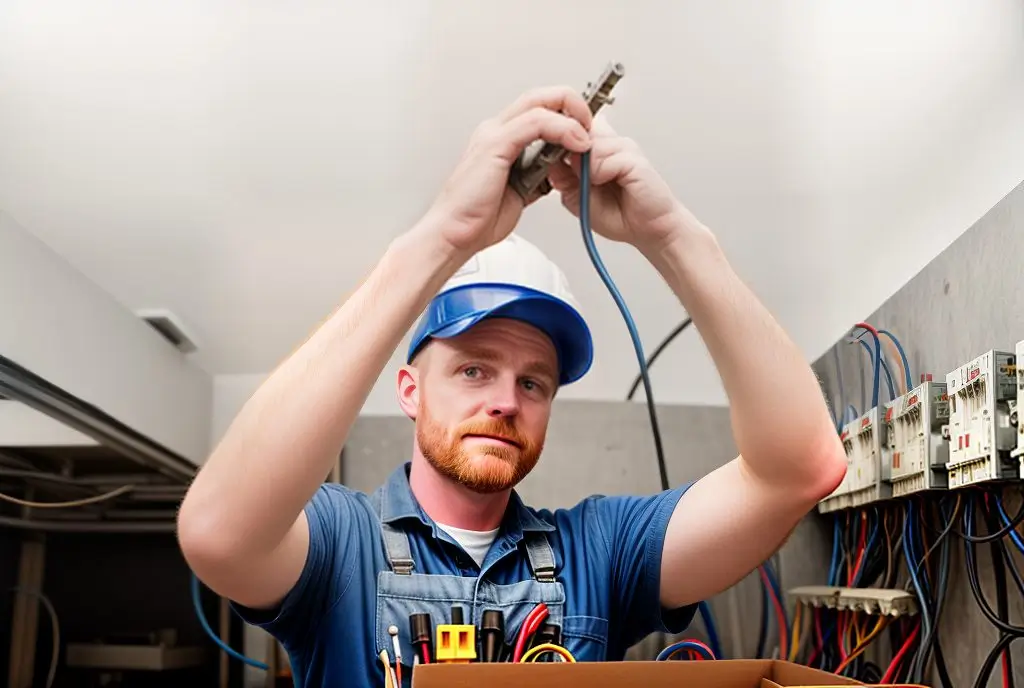
By Alexandru Goncear, Owner and CEO, ElectON Enterprise. Washington electrical contractor license ELECTEL765MN.
When an inspection does not pass, the homeowner usually finds out from the Seattle Services Portal before anyone calls them. The result says the work failed, and the questions come fast. Is the job wrong? Is the electrician any good? Are the walls coming back open?
Usually the answer is less dramatic than the word “failed” makes it sound. Most write-ups are one or two specific items, noted on the permit record and fixed in an hour or two. A few are expensive. Nearly all of them can be avoided if you know what the inspector is going to look at before they show up.
This is how an electrical inspection works inside Seattle city limits, and the eight problems I see written up more than any others.
Seattle inspects its own electrical work
Most of Washington gets electrical permits and inspections from the Department of Labor and Industries. Seattle does not. Inside city limits, the Seattle Department of Construction and Inspections (SDCI) issues the permit and sends the inspector, and the work is checked against the 2023 Seattle Electrical Code, which is the national code plus the city’s own amendments. Shoreline, Lake Forest Park and unincorporated King County go through L&I. Bellevue, Renton, Burien, Tukwila and several other neighbors run their own programs.
That patchwork matters when you hire. Anyone pulling Seattle electrical permits as a business needs a Washington electrical contractor license and a Seattle business license, and a crew that mostly works outside the city may not know how SDCI runs. If you are comparing residential electricians in Seattle, WA, ask each one who pulls the permit and how often they work with SDCI.
Homeowners can pull their own electrical permit in Seattle, but only for a house they own and live in. The inspection standard is the same either way.
One more thing to know this year. L&I moves to the 2026 National Electrical Code on December 31, 2026, and Seattle adopts codes on its own schedule. If your project straddles a code change, ask which edition it is being inspected under.
The three inspections most permits need
SDCI says most electrical permits need three inspections. Smaller jobs may skip one, but the order does not change, and each stage has to pass before the work behind it gets covered up or switched on.
- Cover inspection. This is called once the new circuits are roughed in: boxes mounted, cable run and secured, grounding conductors made up, and nail plates in wherever cable passes close to the face of a stud. Nothing is covered yet. That means no insulation, no drywall, and no receptacles or switches. Underground work counts as well, so a trench out to a detached garage or a hot tub gets inspected before it is backfilled.
- Service and feeder inspection. For jobs that touch the service, this happens once the mast, meter base, service panel and grounding electrode conductors are in, with branch circuits connected where possible.
- Final inspection. Everything is finished. Panel covers are on, each circuit is labeled in the right space on the directory, every cover plate is installed, and all equipment and appliances are installed, grounded and energized. An EV charger that has never been powered up is not ready for a final.
Booking the inspection, and who needs to be there
You can request an inspection through the Seattle Services Portal or SDCI’s 24-hour inspection line at (206) 684-8900. Have the permit number ready. SDCI aims for next-day inspections with a limited number of same-day slots, but it also says plainly that the next opening can be several days out. You will not get a time of day. Inspectors take calls at their district numbers on weekday mornings from 7:00 to 8:00, and if you have a real scheduling problem, that is the window to call. SDCI keeps the current numbers and rules on its electrical inspections page, which is worth bookmarking if you are working under an owner permit.
Somebody has to let the inspector in. SDCI lists “the inspector could not get on site” among the reasons an inspection is not approved, so a locked door costs you a trip and your place in the queue. If the panel is in a locked basement, the crawlspace hatch is under a pile of boxes, or the dog is not friendly with strangers, deal with it the day before. On our jobs we book the inspection and meet the inspector, so you do not have to take the day off, but someone still has to make sure we can get through the door.
The 8 things that fail most often
These are not ranked by how dangerous they are. They are the items I see written up most in Seattle houses, roughly in order of how often they come up.
1. Work covered up before the cover inspection
This is the expensive one. Insulation goes into an exterior wall, or the drywall crew shows up a day early, and the cover inspection never happened. SDCI’s instruction is simple: do not cover the work until the inspector approves it. An inspector cannot sign off on wiring they cannot see, and the fix is opening the wall back up.
On a remodel this is mostly a scheduling problem between trades. The electrician needs to know when insulation is booked, and the general contractor needs to treat the cover inspection as a real step, not a formality. It is the first thing we plan around on remodeling and renovation electrical work.
2. Missing GFCI or AFCI protection where the current code wants it
The code adds GFCI and AFCI requirements nearly every cycle, and plenty of people, some electricians included, are still working from an older edition in their heads. Under the code Seattle enforces now, GFCI protection covers every receptacle in a kitchen (not only the countertop ones), along with bathrooms, laundry areas, garages, crawl spaces, outdoor receptacles and basements, finished or not. AFCI protection covers most 120-volt living-space circuits, including bedrooms, living rooms, hallways, closets, kitchens and laundry areas.
The rule that catches remodels is about existing circuits. If you extend or modify an old circuit in one of those rooms, that circuit generally needs AFCI protection too, either at the breaker or at the first receptacle. There is a narrow exception for very short extensions that add no new outlets. Add a receptacle to an old bedroom circuit in a Wallingford Craftsman and you may be adding an AFCI breaker along with it.
A related write-up is the ungrounded three-prong receptacle. Protecting a two-prong circuit with a GFCI is a legitimate fix, but the receptacles have to be labeled “No Equipment Ground,” and the label is the part people skip. Our outlet grounding page explains how it is done properly.
3. Grounding and bonding at the service
Older Seattle houses often rely on the metal water pipe as their main grounding electrode, sometimes with nothing else behind it. The code wants that pipe supplemented, usually with ground rods, and it wants the bonding jumpers where they belong. Inspectors look hard at this on any service or panel job.
The trap is the water line. When the old galvanized or copper line from the street gets replaced with plastic, the pipe in the basement is no longer in contact with the earth. The clamp is still on it and still looks fine, and it is grounding to nothing. A panel replacement in a house like that will not pass until the grounding electrode system is rebuilt. It is a small line item, but it surprises people when it shows up on a quote for a panel replacement.
4. No working space in front of the panel
The code wants a clear space in front of a panel at least 30 inches wide and 36 inches deep, with six and a half feet of headroom, and it keeps panels out of bathrooms and clothes closets. Older houses here break those rules all the time. Nobody was careless. The panel went wherever it fit decades ago, and the house grew around it: a furnace in front of it, a basement finished with the panel inside a closet, shelving bolted to the wall beside it.
Shelving and storage are easy, so clear them before the inspector arrives. A panel location that was legal when it went in is a different matter. On a panel replacement, the new equipment generally has to meet today’s rules, and in some older houses that means moving it. That changes the price a lot, so it belongs in the estimate, not on inspection day.
5. Open slots and loose parts in the panel
Every unused opening in a panel has to be closed with a filler plate made for it. When a breaker gets pulled or moved and nobody blanks the slot, that is a write-up, and a fair one, because it leaves an open path to live parts. The same goes for missing knockout seals, missing cover screws, and cover screws swapped out for long pointed ones that can pierce a wire behind the cover. None of it costs much. It just has to be done.
6. Two wires under one screw
Most breakers are listed for one wire per terminal. Two wires under the same breaker screw, called a double tap, gets written up unless that breaker is specifically listed for two. Neutrals are stricter: each neutral gets its own hole on the bar, and two neutrals sharing one fails every time. Older panels are full of both, usually because someone added a circuit without adding a breaker. In the Federal Pacific and Zinsco panels still hanging in a lot of Lake City and Wedgwood ramblers, the fix is often a new panel. Otherwise, if there is no room left for a proper fix, that is a conversation about a subpanel or a wiring update, not a reason to stack wires.
7. Cable that is not secured or protected
Nonmetallic cable has to be stapled within 12 inches of each box and at least every four and a half feet along the run. Where it passes through a stud closer than an inch and a quarter to the face, it needs a steel nail plate so a drywall screw cannot find it later. Cable entering a panel or a metal box needs a proper clamp or connector, and cable run along an unfinished basement or garage wall, where it can get hit, needs protection. These are cover-inspection items, which is why SDCI’s checklist for the cover inspection mentions nail plates by name.
8. Labels and listings that do not match the work
At final, every circuit has to be labeled in its own space on the panel directory, clearly enough to tell it apart from the others. “Kitchen” written next to three breakers does not do that, and neither does a directory nobody updated after the remodel. The inspector also checks that equipment is installed the way its listing and instructions say. The common miss is an EV charger whose internal setting does not match its breaker. A charger set to deliver 48 amps needs a 60-amp circuit. Put it on a 50-amp breaker and it fails, even if it seems to charge fine. We covered the details in what the 2023 code changed about EV charger installs in Washington.
What happens when an inspection does not pass
The result posts to the permit in the Seattle Services Portal, and the inspector adds notes for anything that failed or only partly passed. Read those notes before anyone picks up a tool. They say exactly what was written up, and they are more reliable than anyone’s memory of what the inspector said on the way out the door.
The items get fixed, and the inspection gets requested again the same way as the first one. SDCI may charge an extra fee once a job needs more than one re-inspection, so the first re-inspection is the one to get right. A partial pass is common on bigger jobs and is not a crisis. It usually means most of the work is approved and one area needs another look.
When the write-up is about the electrician’s work, fixing it should be on the electrician. If our work does not pass, we come back and fix it at our own cost, and we stay with the job until it is signed off.
Service upgrades have a second gatekeeper
If the job changes the size of your service, SDCI is not the only approval. Seattle City Light runs its own application for new or upgraded service, separate from the electrical permit, and it asks for four to six weeks to process it. The SDCI service inspection and the City Light work have to line up, so that application needs to go in early. If you are planning a panel upgrade ahead of a new EV or a heat pump, start that clock before you order the equipment.
Buying a house? Look up the permits
Seattle permit records are searchable by address in the Seattle Services Portal. If a listing says the house was rewired or the panel was replaced, look for the permit and its final inspection. A permit that was issued but never finaled is worth asking about before closing, because it means nobody signed off on that work. Unpermitted electrical work tends to come up at the worst possible moment, during a sale or an insurance claim.
Common questions about SDCI electrical inspections
Do I need to be home for an SDCI electrical inspection?
Someone has to give the inspector access to the work and the panel, but it does not have to be you. If your electrician meets the inspector, you only need to make sure they can get in.
Can the insulation go in once the cover inspection passes?
Yes, once the cover inspection shows as approved on the permit. Check the result in the Seattle Services Portal rather than going by a conversation at the door.
Does a failed inspection cost extra?
SDCI says it may charge an additional fee when a job needs more than one re-inspection. Getting the fixes right the first time keeps you clear of it.
Is the inspection different if I did the work myself on an owner permit?
No. The inspector holds owner work to the same code as a contractor’s. Owner permits in Seattle are only for a house you own and live in.
Does SDCI inspect electrical work in Shoreline or Bellevue?
No. SDCI covers Seattle city limits. Shoreline goes through L&I, and Bellevue runs its own electrical permits and inspections.
Getting through on the first try
Almost everything on this list gets caught before an inspector ever sees it, as long as the person doing the work checks it against the current Seattle code and builds the inspections into the schedule. We pull the SDCI permit, book each inspection, meet the inspector, and handle the City Light side when the service is changing. What we usually find in Seattle houses, by neighborhood and build year, is on our Seattle residential electrician page. Request an estimate or call (253) 508-7529.
About the author
Alexandru Goncear is the owner and CEO of ElectON Enterprise and a Washington-licensed electrician working on residential systems across King, Pierce and Snohomish County. He writes every estimate himself and stays the point of contact through permitting, the work and the final inspection.
ElectON Enterprise. Kent office, closest to Seattle: 1609 Central Ave S Suite E, Kent, WA 98032. Headquarters: 36007 9th Ct SW, Federal Way, WA 98023. Phone: (253) 508-7529. Monday to Friday, 8:00 AM to 5:00 PM, with emergency service 24 hours. Washington electrical contractor license ELECTEL765MN.